
St. John’s Wort
Botanical Name
Hypericum perforatum
Family
Hypericaceae
Origin and Habitat
Native to Europe, Western Asia, and North Africa. Now widely naturalized and cultivated worldwide.
Botanical Description
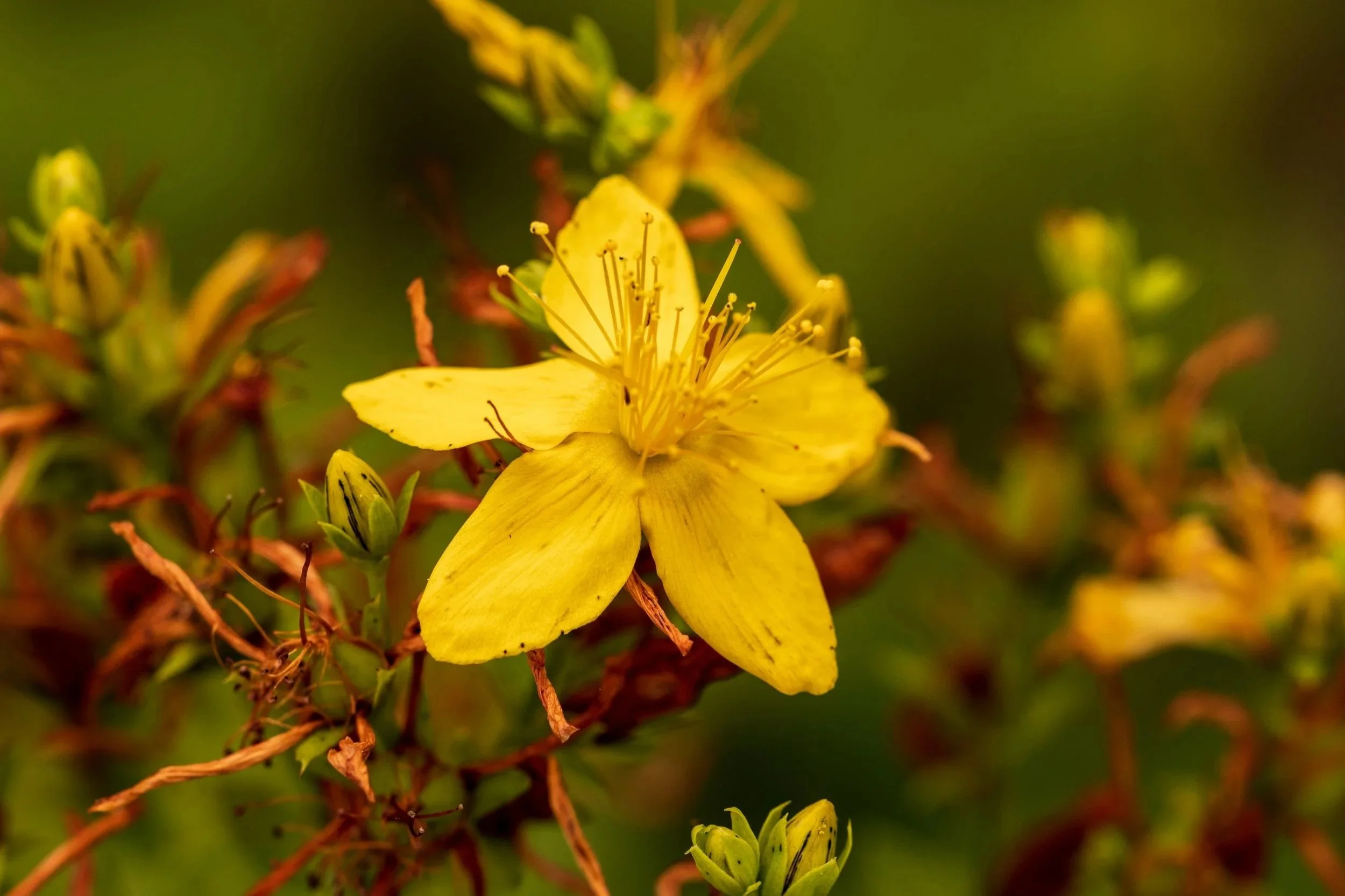
Perennial flowering shrub reaching up to 2 meters in height. Bright yellow flowers with numerous prominent stamens. Leaves contain translucent oil glands that appear perforated when held to light.
Plant Parts Used
Flowering tops and aerial parts.
Key Constituents
Hypericin, hyperforin, flavonoids, phenolic acids.
Mechanisms of Action
Modulates neurotransmitter activity including serotonin, dopamine, and norepinephrine. Demonstrates antiviral, anti inflammatory, and wound healing activity in topical applications.
Traditional Applications
Used in European herbal medicine for mood disturbances, nerve pain, and wound care. Historically applied for burns, injuries, and emotional distress.
Evidence Informed Uses
Mild to moderate depressive disorders. Anxiety states. Topical support for minor wounds and certain viral skin conditions.
Preparations
Standardized extracts, tinctures, capsules, and infused oils for topical use.
Safety and Considerations
May interact with prescription medications including antidepressants, oral contraceptives, anticoagulants, and immunosuppressants. Can increase photosensitivity.
Clinical Relevance
One of the most extensively researched botanical medicines for mood support, commonly integrated into modern herbal and integrative care practice.
