
Female Ginseng
Botanical Name
Angelica sinensis
Family
Apiaceae
Chinese Name
Dang Gui
Origin and Habitat
Native to China, Japan, and Korea. Now cultivated in temperate regions for medicinal use.
Botanical Description
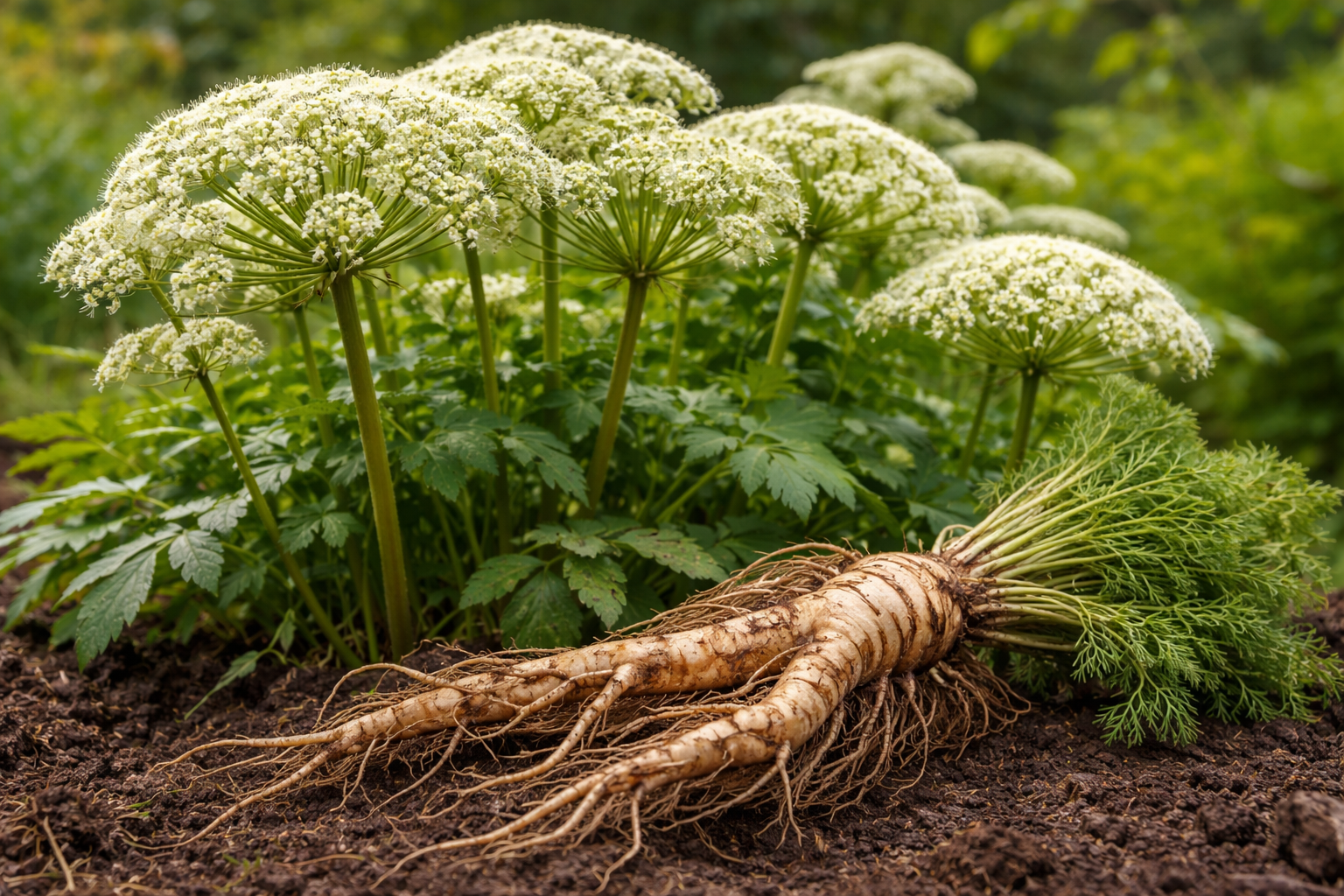
Perennial herb with a tall hollow stem, reaching up to about 2 meters. Produces large compound leaves and umbrella-like clusters of small white or greenish flowers.
Plant Parts Used
Root.
Key Constituents
Organic acids, volatile oils, ferulic acid, ligustilide, polysaccharides.
Mechanisms of Action
Traditionally supports circulation and smooth muscle relaxation. Influences estrogen metabolism and microcirculatory flow in herbal medicine practice.
Traditional Applications
Used in Traditional Chinese Medicine for women’s health; historically applied for menstrual discomfort, irregular cycles, and blood nourishment.
Evidence Informed Uses
Adjunctive support for mild menstrual irregularities, mild symptoms related to hormonal fluctuation, and circulatory support in integrative practice.
Preparations
Decoctions, tinctures, capsules, fluid extracts.
Safety and Considerations
May interact with anticoagulant medications. Use caution in individuals with bleeding disorders. Consultation with a qualified practitioner is advised for combined use with hormonal therapies.
Clinical Relevance
One of the most widely recognized herbs for women’s health in traditional and integrative herbal medicine, valued for its influence on circulation and reproductive support.
