
Valerian
Botanical Name
Valeriana officinalis
Family
Caprifoliaceae
Chinese Name
Xia Cao
Origin and Habitat
Native to Europe and parts of Asia. Now widely naturalized in temperate regions worldwide.
Botanical Description
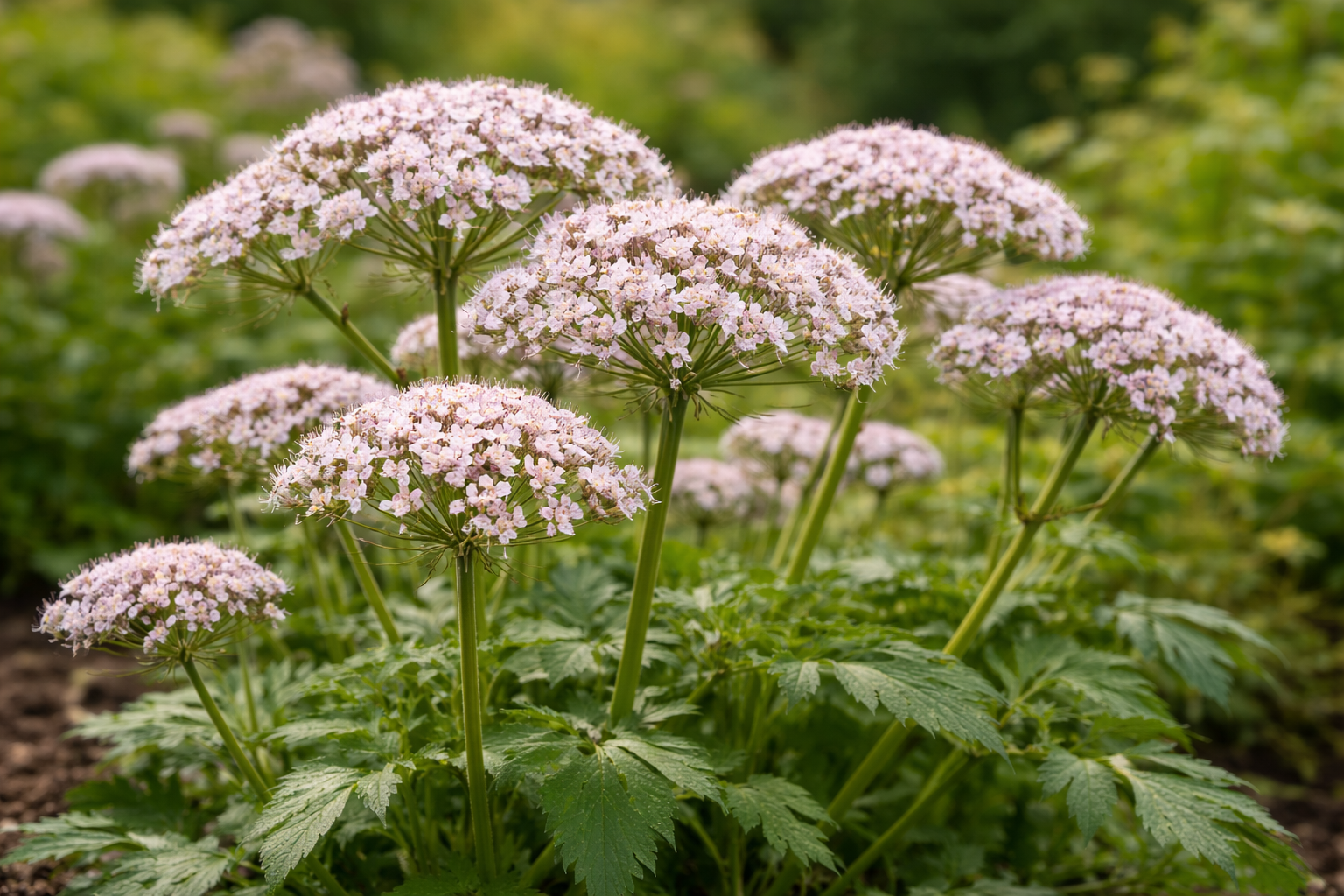
Perennial herb with clusters of sweetly scented pink-white flowers and a branched rootstock. Known for its strong aromatic root.
Plant Parts Used
Rhizome and root.
Key Constituents
Valerenic acid, valepotriates, volatile oils, sesquiterpenes, GABA and related compounds.
Mechanisms of Action
Traditionally supports nervous system modulation with calming, antispasmodic, and mild sedative effects; may influence GABAergic pathways.
Traditional Applications
Used historically in European herbal medicine to ease nervous tension, agitation, and sleep disturbances.
Evidence Informed Uses
Adjunct support for restlessness, anxiety, and mild insomnia in integrative herbal practice.
Preparations
Tinctures, extracts, infusions, capsules.
Safety and Considerations
Generally well tolerated. High doses or long-term use may cause mild gastrointestinal discomfort or headaches. Use caution when combined with sedative medications; consult a qualified provider when using with central nervous system depressants.
Clinical Relevance
Valerian is a widely recognized calming and sleep-supporting herb with longstanding traditional use and integration into contemporary herbal practice.
