
The Sacred Herb, Hypericum, With a Focus on Hypericum Infused Oil
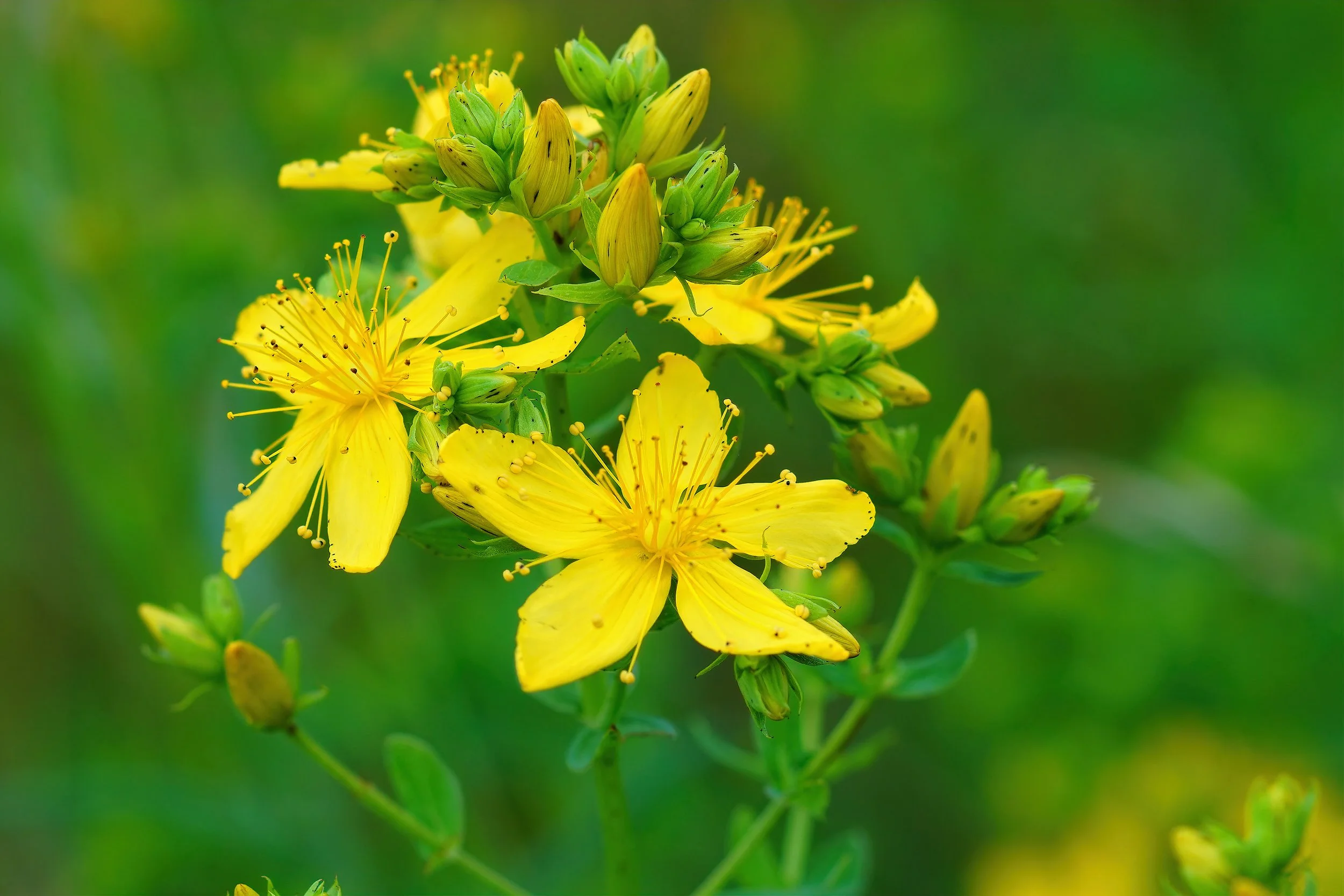
Botanical Identification
Botanical name: Hypericum perforatum
Common name: St. John’s Wort
Hypericum has become one of the most widely used and commercially distributed medicinal herbs worldwide. While much attention has been given to its internal use, particularly in relation to emotional wellbeing, this article focuses on the external applications of the plant, with particular emphasis on Hypericum infused oil.
Preparation and External Use
The most common form used externally is an oil infusion prepared from the fresh flowers. This herbal oil is produced through controlled extraction processes, often within pharmaceutical grade GMP facilities, allowing the base oil, most commonly olive oil, to absorb the plant’s active constituents. One of the primary compounds found in Hypericum is a naphthodianthrone known as hypericin. This compound has been extensively studied and is responsible for the oil’s characteristic deep red coloration, which is widely regarded as an indicator of quality and potency. Hypericum oil may be applied directly to the skin or incorporated into creams and other topical formulations.
Regulatory and Pharmacopeial Status
Hypericum is classified in many regions as a pharmacopeial medicinal herb and may be subject to regulatory oversight depending on local laws governing medicinal plant use and commercial distribution.
Botanical Description
Hypericum is a structured, flowering shrub that can reach heights of up to two meters. It grows upright from a relatively thick central stem, with symmetrical branching on both sides. Each branch typically terminates in a single flower or divides into smaller branchlets, each bearing a flower at its tip. The bright yellow flowers open fully and feature numerous prominent stamens that attract pollinators, particularly bees.
Leaf Structure and Species Characteristics
The leaves are thin and green, dotted with translucent oil glands that appear as tiny perforations when held to the light. This distinctive feature inspired the Latin species name perforatum. Hypericum is native to Europe, Western Asia, and North Africa, and is now widely distributed across many regions of the world, both as a wild growing plant and as a cultivated commercial crop.
Traditional and Symbolic Significance
The Latin name Hypericum is associated with ancient beliefs regarding the plant’s protective qualities against negative spiritual influences. Historically, the crushed plant was applied to the skin or spread on the walls of homes as a form of protection. The red pigment released during crushing was symbolically linked to the blood of a saint and was believed to provide spiritual safeguarding. Another traditional practice involved hanging bundles or wreaths of the plant on doorways to ward off misfortune.
Historical Medical Use
Hypericum has a long and well documented history of medicinal use. In ancient medical traditions, it was applied externally for burns, wounds, and snake bites. During the Middle Ages, the plant was attributed with exceptional healing powers and was often regarded as having protective and restorative properties that extended beyond the physical level. Its common name, St. John’s Wort, is associated with Saint John the Baptist, a connection reinforced by the plant’s flowering period in June, which coincides with the traditional celebration of his birth on June 24.
Classical Medical References
Classical medical authorities such as Hippocrates, Dioscorides, and Galen all referenced the use of Hypericum in their writings. Paracelsus, the sixteenth century physician, chemist, and philosopher, famously stated that Hypericum surpassed all other remedies and physicians in its healing potential.
Hypericum Oil in Olive Oil, Therapeutic Activity and Uses
Hypericum infused oil is valued for its broad range of applications and is suitable for both long term care and first aid situations. For this reason, it is often considered a foundational preparation in traditional herbal practice.
Traditionally Attributed Activities
Traditionally attributed activities include antiviral, anti inflammatory, antiseptic, antimicrobial, antifungal, connective tissue restorative, skin nourishing, and analgesic effects. These activities are drawn from historical use, traditional medical systems, and empirical clinical observation.
Traditional External Applications
External use has historically included support for conditions such as herpes infections including simplex and zoster, eczema and itching, joint and muscle discomfort, nerve related pain and neuropathy, ear inflammation when applied as drops, bruises and sprains, and support during fracture recovery. Additional applications have included care for inflamed or irritated skin, allergic skin reactions, burns, fungal skin conditions, cracked or irritated nipples, post birth tissue recovery, perineal massage to support tissue elasticity prior to childbirth, preparation for labor, and skin recovery including abdominal stretch marks following pregnancy.
This article is intended for educational purposes only and does not constitute medical advice. Individuals who are pregnant, nursing, managing medical conditions, or taking prescription medications should consult a qualified healthcare professional before using herbal product